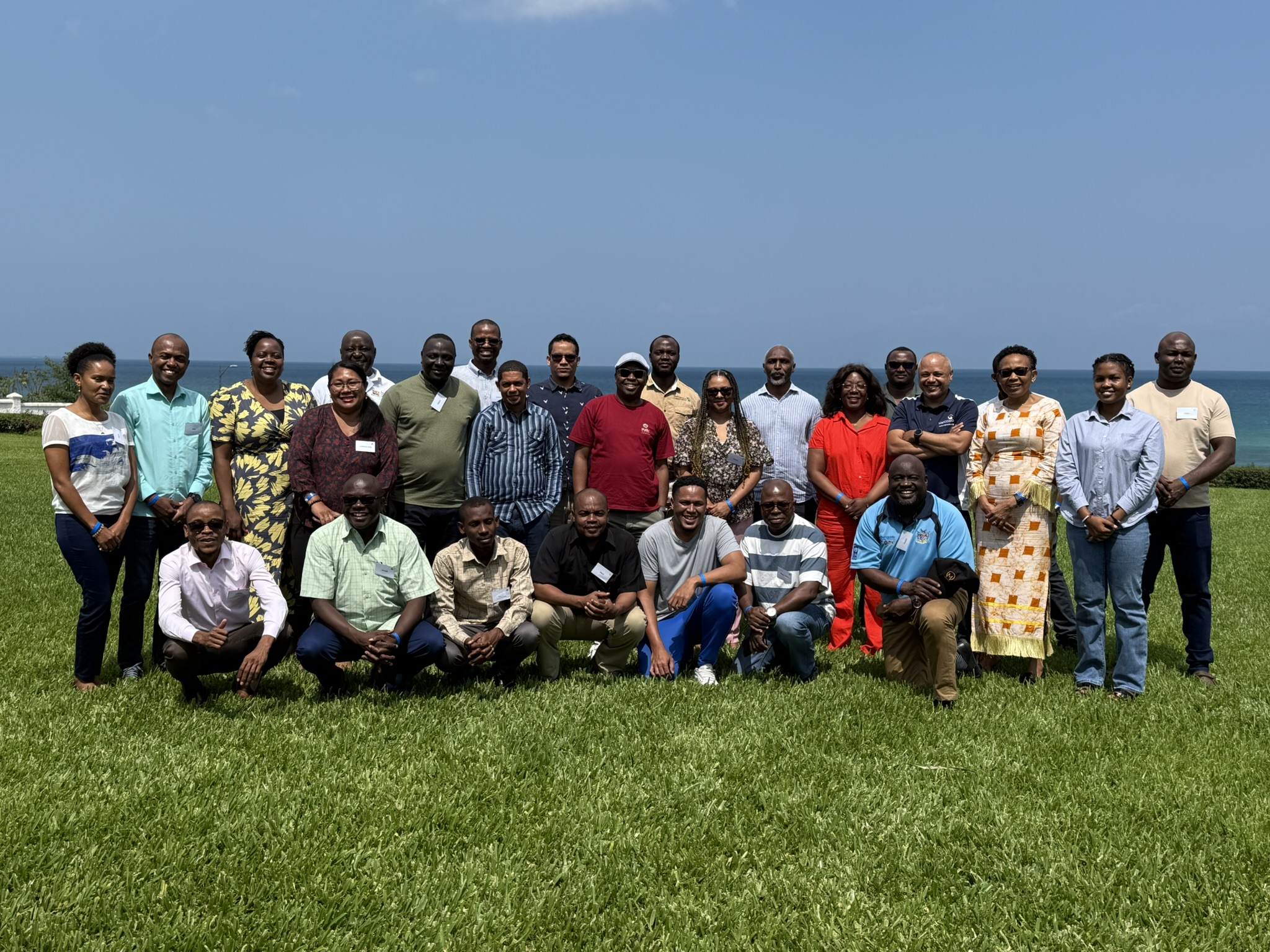


From science to shoreline: CSIR leads marine spatial planning at Zanzibar conservation training
Zanzibar’s most ecologically and culturally vibrant coastal zones is the iconic Paje Beach where turquoise waters meet vital marine ecosystems. Here, scientists, conservation planners and regional stakeholders gathered for a hands-on field engagement like no other.

Zanzibar’s most ecologically and culturally vibrant coastal zones is the iconic Paje Beach where turquoise waters meet vital marine ecosystems. Here, scientists, conservation planners and regional stakeholders gathered for a hands-on field engagement like no other. This was not a typical coastal visit; it was the Systematic Conservation Planning (SCP) Training – Field Engagement, hosted in partnership with the Western Indian Ocean Marine Science Association (WIOMSA), with the Council for Scientific and Industrial Research (CSIR) playing a pivotal role as the technical lead for the Marine and Coastal Science for Management of the Western Indian Ocean (MarCOSIO) initiative.
Held from 1 September to 5 September 2025, the event marked a significant milestone in the MarCOSIO project, a regional initiative aimed at improving marine spatial planning (MSP) through robust, science-based conservation strategies.
As the technical lead of MarCOSIO, the CSIR, together with WIOMSA, brought world-class expertise in MSP, geospatial analytics and SCP to the forefront of this engagement.
Participants from across the Western Indian Ocean (WIO) region, including scientists, policymakers and marine resource managers, were introduced to CSIR-led tools and approaches that inform data-driven decision-making for the sustainable management of marine and coastal areas.
Jonathan Killow, project coordinator within the NextGen Enterprises and Institutions cluster, at CSIR led a dynamic session on ship trafficking, highlighting: “This is not just about protecting ecosystems; it is about protecting livelihoods, cultures and economies that rely on marine spaces. Science gives us the tools to do that intelligently,” said Killow.
The WIO is one of the world’s most biodiverse and economically vital marine regions, supporting millions of livelihoods through fishing, tourism and maritime trade. However, it is also under pressure from climate change, overfishing and coastal development.
The SCP Training aims to empower countries and communities in the region to design marine protected areas and other conservation strategies based on sound ecological data, community engagement and long-term sustainability goals.
The CSIR’s leadership ensures that the tools and frameworks developed are not just technically sound, but also contextually relevant, adaptable to different countries’ needs and aligned with regional and global conservation targets, including the Global Biodiversity Framework and the United Nation Decade of Ocean Science.
Paje Beach served as a living laboratory for the training, where participants engaged in a full-day field session. Using CSIR developed planning frameworks and tools, they:
- Collected spatial data on biodiversity features, human activities and ecological threats;
- Practiced scenario modelling to identify conservation priorities;
- Discussed trade-offs between ecological integrity and socioeconomic use; and
- Simulated real-world decision-making for designing marine zones that support conservation and community needs.
This field engagement was the culmination of several capacity-building workshops held under the MarCOSIO project, which the CSIR has helped design and deliver over the past seven to eight years.
“It is one thing to discuss conservation in theory; it is another to stand on the beach, talk to local fishers and understand the daily realities behind the data,” noted by Dr Pascal Thoya from WorldFish.
The collaboration between the CSIR and WIOMSA is a cornerstone of the MarCOSIO project’s success. While WIOMSA brings deep regional networks, local knowledge and policy insight, the CSIR contributes technical excellence, planning tools and research-based innovation.
Together, they are driving a regional shift towards evidence-based ocean governance, where science informs policy and local communities are active partners in shaping the future of marine conservation.
This field engagement also supported WIOMSA’s broader mission to strengthen capacity among marine scientists and practitioners in the WIO, ensuring that the next generation of conservation leaders is equipped to make strategic, science-informed decisions.
MarCOSIO is funded through the Swedish International Development Cooperation Agency and implemented by WIOMSA in partnership with institutions such as the CSIR, University of Dar es Salaam, Kenya Marine and Fisheries Research Institute and others.
Its overarching goal is to:
- Build capacity in marine and coastal spatial planning;
- Develop science-based planning tools and models;
- Foster regional collaboration for sustainable blue economies; and
- Align conservation efforts with national and global biodiversity targets.
The CSIR’s technical leadership ensures that the methodologies, datasets and tools developed are robust, scalable and usable across countries in the WIO region, from Kenya and Tanzania to Mozambique, Madagascar, Comoros and the Seychelles.
“Science is most powerful when it is shared, applied and anchored in local reality,” said Killow. “That is what we are doing here and it is only the beginning.”
Highlights and outlined activities:
- The mid-week field visit translated planning theory into practice, offering participants direct engagement with local actors in artisanal fisheries, seaweed farming and tourism operations such as snorkelling and kite surfing.
- Artisanal fishers shared insights into seasonal catch dynamics, resource pressures and grassroots conservation efforts. Tourism stakeholders discussed the delicate balance between ecological stewardship and visitor experience, positioning Paje as a biodiversity hotspot and a cultural gateway.
- This activity enriched the training experience by surfacing community priorities and generating locally grounded data that should inform future conservation planning, stakeholder reporting and institutional learning. It also reinforced MarCOSIO’s commitment to integrating local knowledge into regional blue economy strategies that promote sustainable economic utilisation of ocean spaces in innovative ways.
The CSIR’s presence in Zanzibar reaffirmed its role as not just a research institution but a regional enabler of ocean sustainability. Through the MarCOSIO project and partnerships such as the one with WIOMSA, the CSIR is ensuring that scientific knowledge is translated into practical action protecting ecosystems, empowering communities and supporting governments to build resilient, sustainable marine economies.